
Frontier AI Models in September 2026: Capabilities, Benchmarks, and Real-World Economics
A factual comparison of Claude Fable 5.1, GPT-6 Astra, Gemini 3.8 Flash, and DeepSeek V4.1-Flash across verified benchmarks, operating system interaction, and API pricing.
Four flagship models launched between September 1 and 10, 2026: Claude Fable 5.1, GPT-6 Astra, Gemini 3.8 Flash, and DeepSeek V4.1-Flash. Vendor benchmarks overstate production gains, so compare them by scores without provider scaffolding, shell execution error rates, and cached inference cost across agent loops.
Vendor announcements from Anthropic, OpenAI, Google, and DeepSeek claimed leaps across standard benchmarks.

1. September 2026 Roster
Each lab optimized for a specific operational role:
| Model | Lab | Release Window | Architecture Focus |
|---|---|---|---|
| Claude Fable 5.1 | Anthropic | September 01, 2026 | Adaptive thinking |
| GPT-6 Astra | OpenAI | September 03, 2026 | Operator & reasoning |
| Gemini 3.8 Flash | Google DeepMind | September 02, 2026 | High-throughput multi |
| DeepSeek V4.1-Flash | DeepSeek AI | September 10, 2026 | Causal Encoder-Decoder |
Claude Fable 5.1
Anthropic introduced Claude Fable 5.1 on September 1, 2026, pairing it with Claude Mythos 5.1 for trusted cybersecurity and biological research. Fable 5.1 adjusts deliberation depth based on query difficulty. It includes a 1,000,000 token context window and cuts prompt cache read pricing to $0.25 per million tokens.
GPT-6 Astra
OpenAI launched GPT-6 Astra on September 3, 2026, rolling out to paid accounts before releasing general API access. Astra serves as OpenAI's operator model for computer use, command-line operations, and interactive troubleshooting. It supports a 1,050,000 token context window and carries a Critical cybersecurity rating under OpenAI's Preparedness Framework.
Gemini 3.8 Flash
Google DeepMind released Gemini 3.8 Flash alongside Gemini 3.8 Flash Cyber on September 2, 2026. Built on the 3.7 architecture line, the model processes text, audio, images, and video in a 1,000,000 token window. It targets high-frequency tool pipelines where token throughput and low latency matter most.
DeepSeek V4.1-Flash
DeepSeek released V4.1-Flash on September 10, 2026. The architecture uses a Causal Encoder-Decoder design on top of a 552-billion parameter Mixture-of-Experts base, activating 8 billion parameters on input processing and 16 billion on output generation. This compresses Key-Value cache memory requirements, keeping long-context inference costs low.
2. Standard vs Provider Benchmarks
Provider announcements often blend scaffolded agent setups with standalone benchmark scores.
| Evaluation Metric | Claude Fable 5.1 | GPT-6 Astra | Gemini 3.8 Flash | DeepSeek V4.1-Flash | Methodology Context |
|---|---|---|---|---|---|
| ARC-AGI-3 (Standard) | No comparable score | 62.7% | No score in snapshot | No score in snapshot | Standard ARC Prize evaluation harness |
| ARC-AGI-3 (Provider Adapter) | No comparable score | 99.9% | No score in snapshot | No score in snapshot | OpenAI custom provider harness |
| DeepSWE v1.1 | 67.4% | 74.1% | 73.8% | 73.2% | Long-horizon software engineering benchmarks |
| Terminal-Bench 4.0 | 55.8% | 57.9% | 19.1% | No public data | Full agent system with bash execution |
| ExploitBench | Restricted (Mythos) | 100.0% | No public data | No public data | Automated sandbox vulnerability exploitation |
| ExploitGym | Restricted (Mythos) | 42.4% | No verified score | No public data | Complex multi-stage defensive security |
ARC-AGI-3
GPT-6 Astra scored 99.9% on ARC-AGI-3 inside OpenAI's proprietary Provider Adapter harness. That harness supplies domain-specific search trees, automated test generation, and state management.
On the independent ARC Prize Foundation Standard Evaluation harness, Astra scored 62.7%. The 99.9% figure reflects the agent scaffold around the model, not unassisted reasoning. Production systems should rely on standard harness scores rather than vendor-adapted setups.
DeepSWE v1.1
DeepSWE v1.1 tests an agent's ability to resolve GitHub issues across multi-file codebases. In OpenAI's cross-model evaluation, three models clustered tightly:
- GPT-6 Astra: 74.1%
- Gemini 3.8 Flash: 73.8%
- DeepSeek V4.1-Flash: 73.2% (vendor-reported claim)
- Claude Fable 5.1: 67.4%
The cluster around 73% shows that basic code comprehension and patch generation are now standard across frontier providers. In production, differences show up in how models handle test failures and backtrack after tool errors.
Terminal-Bench 4.0
Terminal-Bench 4.0 measures task completion in a Linux shell. GPT-6 Astra scored 57.9% and Claude Fable 5.1 reached 55.8%, handling path resolution, exit codes, and process inspection.
Gemini 3.8 Flash scored 19.1%. Google tuned Flash for single-shot tool calls and high-throughput routing, leaving multi-command shell administration to heavier models.
3. Production Behavior
Frontier models diverge in how they execute autonomous tool loops.
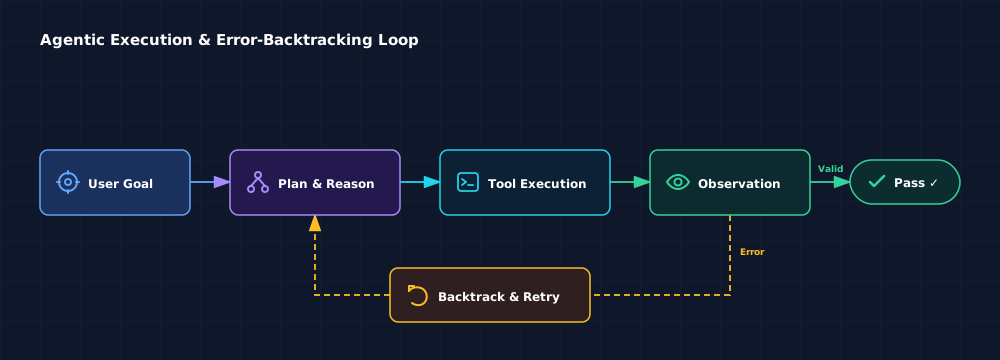
Claude Fable 5.1: Root-Cause Fixes
Behavior: When an error occurs during an agent run, Fable 5.1 traces backward: it checks commit history, verifies dependencies, and edits root configuration files before re-testing. It also rejects incorrect assumptions in user prompts instead of writing code against broken specs.
Use when: Large refactors where modifying one interface impacts distant services; architecture reviews requiring identification of subtle logic flaws; context-heavy loops running dozens of debugging iterations on 200,000+ token codebases.
GPT-6 Astra: Desktop Operator
Behavior: Astra operates desktop interfaces directly by mapping coordinates, driving browsers, and pairing GUI steps with shell commands. OpenAI classified Astra as Critical in cybersecurity after it scored 100% on ExploitBench and 42.4% on ExploitGym. In commercial deployments, OpenAI restricts the model from generating exploit payloads, limiting its role to triage, defensive audits, and patch proposals.
Use when: Desktop and browser automation requiring interactive navigation; defensive security audits in approved environments; novel pattern induction outside common programming templates.
Gemini 3.8 Flash: Fast Multimodal
Behavior: Gemini 3.8 Flash ingests screencasts, audio recordings, and images directly into its context window alongside source code. In autonomous loops, it often concludes tasks after one tool call unless prompts explicitly enforce verification loops.
Use when: Multimodal analysis ingesting video, audio, and text documentation together; high-throughput routing that delegates sub-tasks to specialized models; enterprise RAG querying static knowledge bases via Context Caching at $0.075/MTok.
DeepSeek V4.1-Flash: Low-Cost Context
Behavior: V4.1-Flash uses a Causal Encoder-Decoder structure that activates 8 billion parameters during input ingestion. It maintains stable generation latency past 500,000 tokens of context, keeping GPU memory usage low during multi-step tool sessions.
Use when: High-volume batch jobs (code linting, unit test generation, file restructuring); price-sensitive workloads needing rock-bottom token rates; OpenAI-compatible endpoints where throughput outweighs GUI navigation.
4. The Caching Economy
Autonomous agents changed API economics. Headline prices per million tokens no longer reflect monthly bills.
| Provider | Model | Standard Input | Cache Read / Context Caching | Standard Output | Caching Mechanism |
|---|---|---|---|---|---|
| Anthropic | Claude Fable 5.1 | $10.00 / MTok | $0.25 / MTok | $50.00 / MTok | Ephemeral Prompt Cache (75% off vs Fable 5) |
| OpenAI | GPT-6 Astra | $10.00 / MTok | $1.00 / MTok | $50.00 / MTok | Cached Input prefix discount |
| Gemini 3.8 Flash | $0.75 / MTok | $0.075 / MTok | $3.75 / MTok | Context Caching on server storage (hourly rate) | |
| DeepSeek | DeepSeek V4.1-Flash | $0.30 / MTok | $0.06 / MTok | $1.20 / MTok | Cache Read discount on prefix matching |
Caching Mechanics
Providers take two distinct approaches to caching:
- Ephemeral Prompt Caching (Anthropic & DeepSeek): When consecutive API calls share an identical prefix (system instructions, tool schemas, conversation history), the server skips re-computing attention states. Anthropic charges $0.25 vs $10.00 (a 97.5% reduction). DeepSeek charges $0.06 vs $0.30 (an 80% reduction).
- Context Caching (Google): Google stores documents, codebases, or video assets in server memory. Queries referencing this cached block pay $0.075 per million tokens, alongside an hourly storage fee.
Real Task Costs
Consider an agent refactoring a service:
- Context size: 150,000 tokens (repository files, schemas, tests).
- Execution: 20 sequential tool calls.
Without caching, sending 150,000 tokens across 20 calls equals 3 million input tokens ($30.00 at $10/MTok).
With prompt caching:
- Step 1 (Cold input): 150,000 tokens * $10.00/MTok = $1.50
- Steps 2 to 20 (Cache hits): 19 * 150,000 tokens * $0.25/MTok = $0.71
- Total input cost: $2.21 (a 92% reduction).
At $0.25/MTok for cache reads, Claude Fable 5.1 costs less in deep iterative loops than cold token rates suggest. DeepSeek V4.1-Flash provides the lowest absolute rates across all categories, making it the choice for bulk background tasks.
5. Key Takeaways
- Test on standard harnesses: GPT-6 Astra's 62.7% on standard ARC-AGI-3 reflects baseline reasoning; 99.9% reflects external scaffolding.
- SWE benchmarks have converged: DeepSWE v1.1 scores cluster between 67% and 74%. Model selection now depends on error handling and shell reliability.
- Shell execution separates tiers: GPT-6 Astra (57.9%) and Claude Fable 5.1 (55.8%) handle Linux environments. Gemini 3.8 Flash (19.1%) fits structured workflows with human supervision.
- Cache rates decide the bill: Claude Fable 5.1's $0.25/MTok cache read makes deep agent runs cheaper than un-cached mid-tier models.
- Pick models by workload profile: Use Fable 5.1 for debugging, Astra for desktop and GUI automation, Gemini for multimodal triage, and DeepSeek for high-volume batch runs.
Sources
- Anthropic. "Claude Fable and Mythos 5.1 Announcement." September 2026. https://www.anthropic.com/claude-fable-and-mythos-5-1
- OpenAI. "GPT-6 Astra: Next-Generation Frontier Model." September 2026. https://openai.com/index/gpt-6-astra/
- OpenAI Developers. "GPT-6 Astra API Model Documentation." September 2026. https://developers.openai.com/api/docs/models/gpt-6-astra
- Google DeepMind. "Gemini 3.8 Flash and Flash Cyber Announcement & Model Card." September 2026. https://blog.google/innovation-and-ai/models-and-research/gemini-models/3-8-flash-and-3-8-flash-cyber/
- DeepSeek AI. "DeepSeek V4.1-Flash Announcement and Specifications." September 2026. https://www.deepseek.com/en/news/deepseek-v4-1-flash/
- ARC Prize Foundation. "OpenAI GPT-6 Astra ARC-AGI-3 Verified Evaluation." September 2026. https://arcprize.org/results/openai-gpt-6-astra
- DeepSWE Research Team. "DeepSWE: Benchmarking Real-World Software Engineering at Scale." arXiv:2607.07946, 2026. https://arxiv.org/abs/2607.07946
- OpenAI. "Safety Overview: GPT-6 Astra Cybersecurity Governance." September 2026. https://openai.com/index/safety-overview-gpt-6-astra/
- Google Cloud. "Gemini API Pricing Documentation." September 2026. https://ai.google.dev/gemini-api/docs/pricing?authuser=3
- DeepSeek AI. "DeepSeek API Pricing Documentation." September 2026. https://api-docs.deepseek.com/quick_start/pricing/

