Codex vs Claude Code in 2026: Which Should You Use?
Codex and Claude Code compared with Terminal-Bench 4.0 scores from tbench.ai, run cost, adoption data and candid notes on where the evidence is weak.
Short answer: Neither wins outright. On Terminal-Bench 4.0, the current version of the independent benchmark, Claude Code with Opus 5.5 resolved 64.8% of tasks and Codex with GPT-6.1 Sol resolved 58.2%. That 6.6-point lead sits just outside the error bars, and the Claude Code run cost about $4.7k against about $0.6k for Codex, roughly 8 times as much. Pick Claude Code when first-pass accuracy on hard tasks matters most, pick Codex when spend matters more, and run both on your own repo before committing.
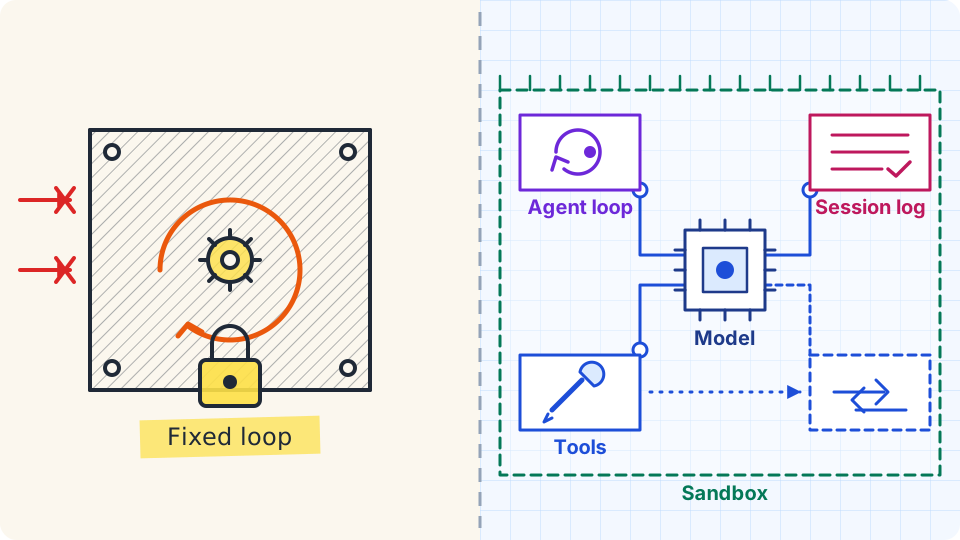
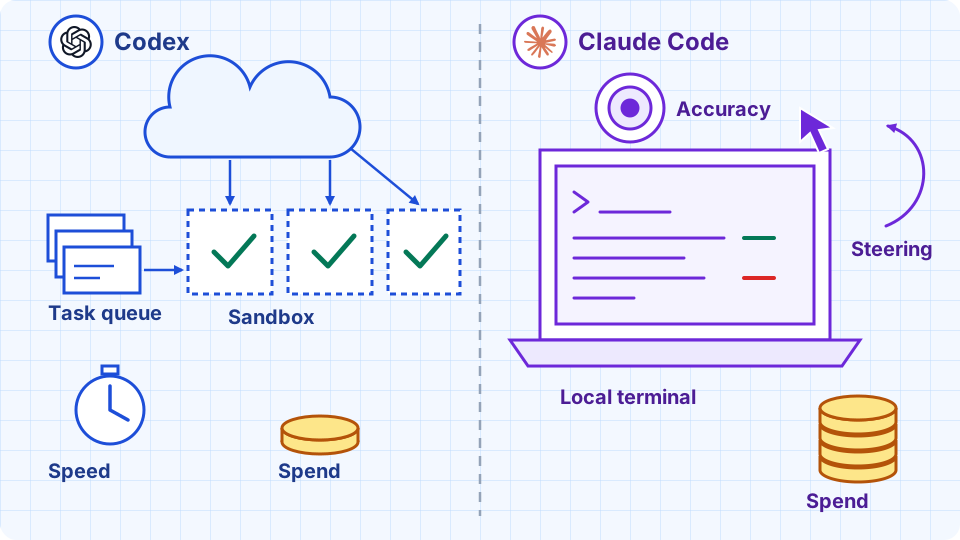
Codex and Claude Code are the two AI coding agents developers compare most often in 2026. Both work as agentic coding tools: they read your codebase, edit files, run commands and open pull requests. They differ in where the work happens and in what a failed attempt costs you.
What are Codex and Claude Code?
Codex is OpenAI's coding agent. Its CLI is an open-source terminal agent under the Apache 2.0 license (GitHub), and Codex also runs as an IDE extension, a desktop app and cloud tasks in separate sandboxes. OpenAI's API pricing page now lists GPT-6.1 Sol and GPT-6.1 Terra as its current GPT-6.1 models (OpenAI).
Claude Code is Anthropic's coding agent. It works in the terminal, IDEs, a desktop app, the web and Slack, and it acts on your local environment. Anthropic's current models are Opus 5.5, Sonnet 5.5, Fable 5.1 and Haiku 5.5 (Anthropic). The CLI is proprietary.
A benchmark score belongs to an agent, a model and an effort setting together. The Terminal-Bench board lists every row that way, for example "Opus 5.5 (max)" with Claude Code. Change the agent or the effort and the score changes, so crediting "Claude" or "Codex" as a whole is too loose.
Which scores higher on benchmarks?
Claude Code leads on the current benchmark, and the gap is moderate.
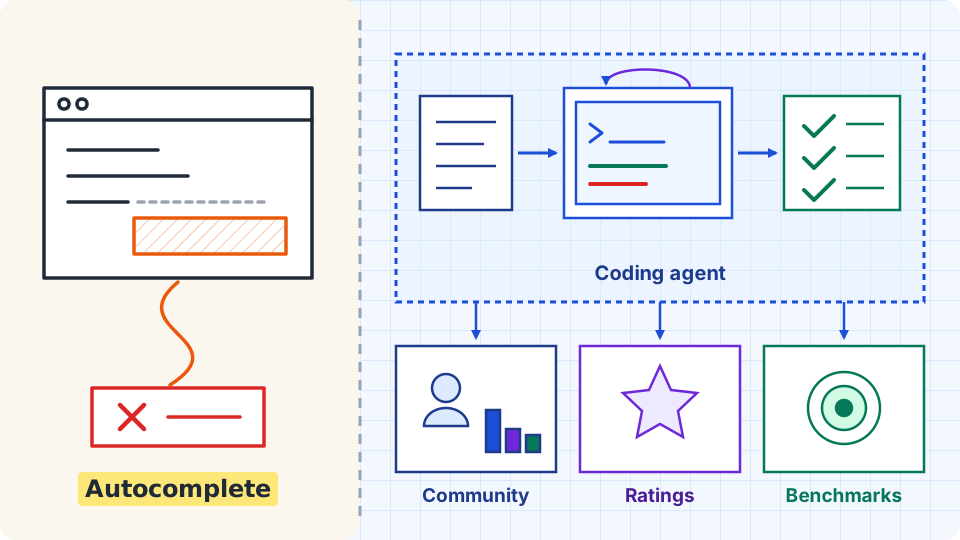
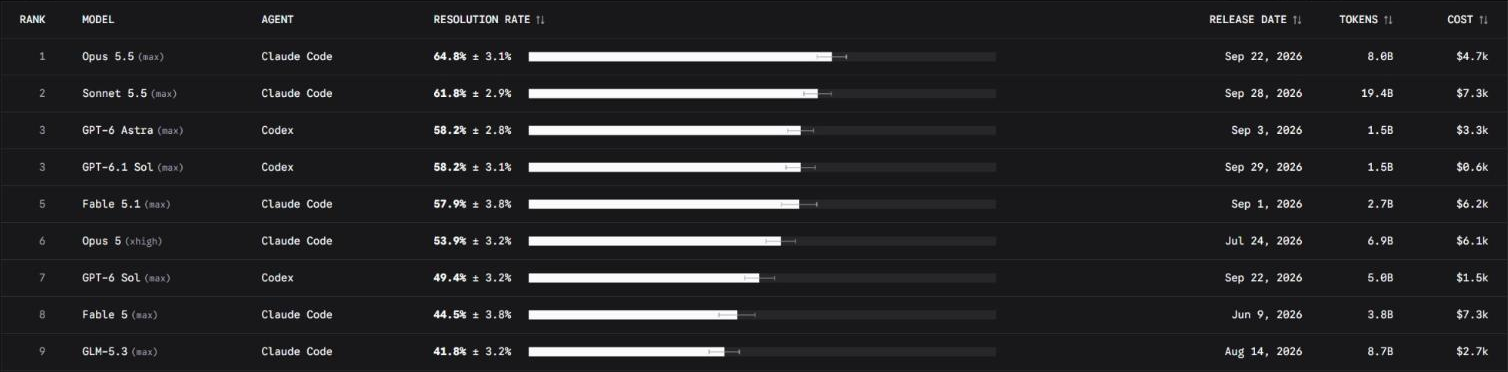
Terminal-Bench is a benchmark of terminal-driven development tasks, hosted by Stanford, Harbor and the Laude Institute. Its leaderboard keeps several versions, and the newest is 4.0.
| Entry (agent + model) | Resolution rate | Tokens | Run cost |
|---|---|---|---|
| Claude Code + Opus 5.5 (max) | 64.8% ± 3.1 | 8.0B | $4.7k |
| Claude Code + Sonnet 5.5 (max) | 61.8% ± 2.9 | 19.4B | $7.3k |
| Codex + GPT-6.1 Sol (max) | 58.2% ± 3.1 | 1.5B | $0.6k |
| Codex + GPT-6 Astra (max) | 58.2% ± 2.8 | 1.5B | $3.3k |
| Claude Code + Fable 5.1 (max) | 57.9% ± 3.8 | 2.7B | $6.2k |
Source: tbench.ai. The ± figures are 95% confidence intervals.
Claude Code holds the top two spots. Opus 5.5 and GPT-6.1 Sol are the current defaults of each tool, and their intervals (about 61.7 to 67.9 against 55.1 to 61.3) just fail to overlap, so the lead is real but small. Codex's best entries sit level with Claude Code's Fable 5.1.
Effort settings matter too. Anthropic's docs list medium as the default effort for Opus 5.5 on the API (Anthropic), while the leaderboard row runs at max. Your daily experience may sit below the leaderboard.
Even so, I would treat this table as a direction, not a verdict. Benchmark boards move fast, and the same site still lists the older 2.1 version, where the ranking looks different, so a number quoted without its version and date is easy to get wrong. The cost column gives a total rounded to $0.1k and no trial count, so it can't be turned into a dollar price per task. A leaderboard also says nothing about your language, repo size or review habits, which probably matter more.
How do Codex and Claude Code compare on cost?
Per run, Codex is far cheaper. Per point of accuracy, it is still far cheaper.
On the same benchmark tasks, the Claude Code entry cost about 8 times as much as the Codex entry while resolving 6.6 points more. The last column below is arithmetic done for this article on top of the leaderboard figures.
| Resolution rate | Tokens | Run cost | Cost per resolution point (derived) | |
|---|---|---|---|---|
| Claude Code + Opus 5.5 | 64.8% | 8.0B | $4.7k | about $73 |
| Codex + GPT-6.1 Sol | 58.2% | 1.5B | $0.6k | about $10 |
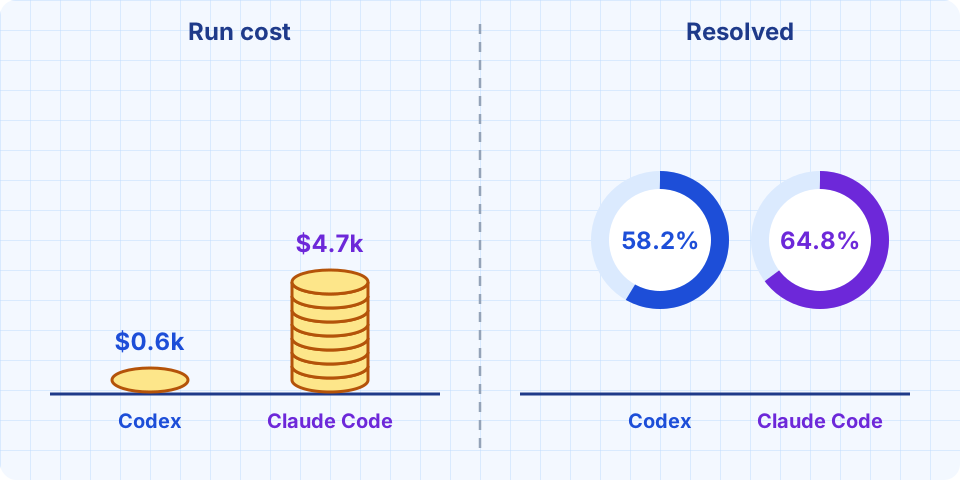
Each resolved point cost about 7 times as much with Claude Code. Whether that premium pays off depends on what a failed attempt costs you. If every miss means a review cycle from a senior engineer, accuracy may be the cheaper option.
I would not lean hard on the derived column. It assumes total cost scales with the resolution rate, and failed runs may cost more or less than successful ones. The $0.6k figure is rounded, so the true ratio could be anywhere from about 7 to 9 times. It shows the order of magnitude, not a price.
List prices explain only part of the gap. Opus 5.5 costs $4 per million input tokens and $20 per million output, against $2 and $10 for GPT-6.1 Sol (Anthropic, OpenAI). That is a factor of two, while the Claude Code run used about 5 times the tokens, 8.0 billion against 1.5 billion. Token use can even beat price: Sonnet 5.5 lists at $2 and $10 per million, half of Opus 5.5, yet its run burned 19.4 billion tokens and cost $7.3k against $4.7k for Opus 5.5.
On subscriptions, Claude Code comes with Claude Pro at $20 a month or Max at $100 and $200. Codex comes with ChatGPT plans, including Plus at $20. Both now meter usage in 5-hour windows with weekly caps and buy-more credits. Developers still report that Codex stretches further at $20, but those are user reports, not published specs.
How many developers use each one?
Claude Code leads in the one developer survey available. Codex reports steep growth from a smaller base. The numbers below measure different things, so don't subtract one from another.
- In The Pragmatic Engineer's survey of 906 engineers (January 27 to February 17, 2026), 46% named Claude Code the tool they love most, against 19% for Cursor and 9% for GitHub Copilot. Seventy percent used two to four AI tools at once, and Codex had about 60% of Cursor's usage (Pragmatic Engineer).
- Anthropic reported a Claude Code run rate above $2.5 billion in February 2026. Weekly active users had doubled since January 1, and enterprise made up over half of revenue (Anthropic).
- OpenAI said on June 2, 2026 that Codex has more than 5 million weekly active users, up more than 6 times since the desktop app launched in February (OpenAI).
Read all three with care. The survey ran in early 2026 among newsletter readers who chose to answer, before several model generations and before Codex's biggest growth, and it reports no "most loved" share for Codex. Weekly active users and run rates are self-reported by the companies, are unaudited, and measure different things.
What differs in day-to-day workflow?
Start with where the code runs. Codex can hand a task to a cloud sandbox (OpenAI's DevDay 2026 recap covers Codex Cloud) or run locally through the CLI. Claude Code works inside your own environment, but it doesn't tie you to the terminal: the /remote-control command opens a Remote Control session that lets you watch and steer the running session from a phone or browser, and it carries over your current conversation history (Claude Code Docs). Your machine has to stay on, because the code still runs there. So if you want to hand off work without keeping your own machine on, Codex's cloud sandbox fits better. If you want the code to run in your own environment while you still watch and steer from afar, Claude Code with Remote Control can do that too.
Context size no longer separates them. Opus 5.5 lists a 1M-token window (Anthropic). GPT-6.1 Sol lists 1.05M in the API, though Codex defaults to 500K (OpenAI). Big windows still fill up, so context compression for coding agents matters with either tool.
The Codex CLI is open source under Apache 2.0, and Claude Code is not. If you need to read or fork the agent itself, that may change your decision. If you want to go further and swap the agent loop itself, the DeepSeek Harness review compares it with both.
Both ship new features most months, so a feature comparison older than a month is probably wrong.
Which should you choose?
| Codex | Claude Code | |
|---|---|---|
| Maker | OpenAI | Anthropic |
| Where it runs | CLI, IDE, desktop app, cloud sandbox | Terminal, IDE, desktop app, web, Slack; your local environment |
| CLI license | Apache 2.0 | Proprietary |
| Current models | GPT-6.1 Sol, GPT-6.1 Terra | Opus 5.5, Sonnet 5.5, Fable 5.1, Haiku 5.5 |
| Terminal-Bench 4.0 | 58.2% (GPT-6.1 Sol) | 64.8% (Opus 5.5) |
| Run cost (4.0) | about $0.6k | about $4.7k |
| API price per million tokens | $2 in, $10 out (Sol) | $4 in, $20 out (Opus 5.5) |
| Plans | ChatGPT plans, Plus at $20 | Claude Pro $20, Max $100–$200 |
Choose Claude Code if your work is hard multi-file change where a wrong first attempt is expensive, if you prefer steering the agent live, or if your company already buys from Anthropic.
Choose Codex if you run many tasks at once, watch token spend closely, want an open-source CLI, or already pay for ChatGPT.
Use both if you can. Most engineers in the Pragmatic Engineer survey already juggle several tools across our 2026 AI coding agents ranking.
If I had to pick one, I would start with whichever tool your team already pays for, and only switch when a week of your own tickets says otherwise. The verdict here would change if the next benchmark version reorders the top rows or if either vendor reprices, so re-check tbench.ai before you act on any number in this article.
How can you test both on your own repo?
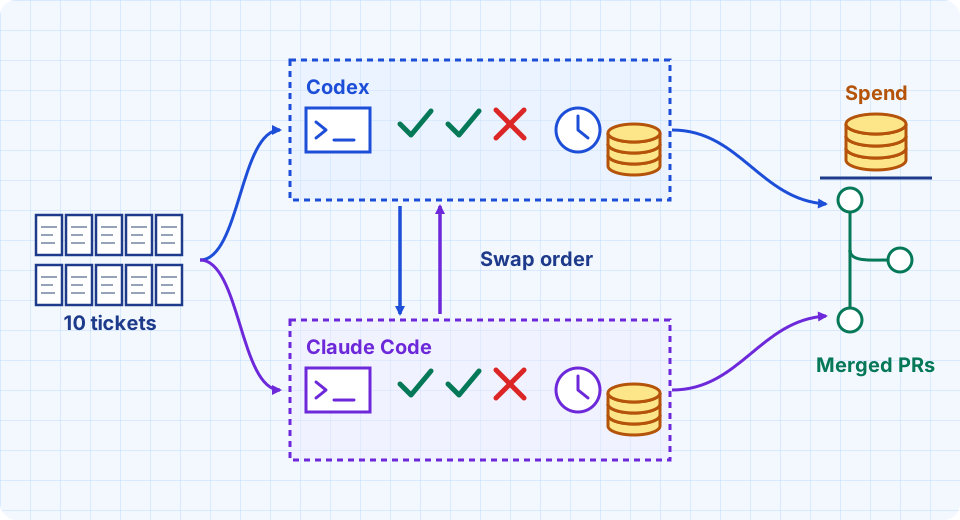
A week is enough to get a signal. Pick ten real tickets of mixed difficulty, and give both tools the same prompts, the same permissions and the same test suite. Record pass or fail, review comments, wall-clock time and credits spent. Then swap the order on a second batch so that learning the codebase doesn't favor whoever goes last. Divide total spend by merged pull requests. That one number answers the question better than any leaderboard here, because it prices your own failure cases. To run both tools on separate tickets at the same time, a desktop like Orca gives each agent its own git worktree.
FAQ
Is Codex better than Claude Code?
Not clearly. On Terminal-Bench 4.0, Claude Code with Opus 5.5 resolved more tasks (64.8% against 58.2%), while the Codex run cost far less. Which is better depends on what a failed attempt costs you.
Which is cheaper?
Codex. On Terminal-Bench 4.0 its run cost about $0.6k against about $4.7k, and per resolved point it was still roughly 7 times cheaper by simple division.
Can I use Codex and Claude Code together?
Yes. Seventy percent of engineers in the Pragmatic Engineer survey used two to four AI tools at once.
Is Codex open source?
The Codex CLI is, under Apache 2.0. Claude Code is proprietary.
What is Terminal-Bench?
A benchmark that tests whether an AI agent can finish real development tasks by driving a terminal: editing files, running commands and fixing failures.
Sources
- Terminal-Bench 4.0 leaderboard (tbench.ai)
- Anthropic API pricing and Claude Opus 5.5 model overview
- OpenAI API pricing and GPT-6.1 Sol model page
- OpenAI: Codex for knowledge work
- openai/codex on GitHub
- Claude Code Docs: Remote Control
- The Pragmatic Engineer: AI tooling 2026
- Anthropic: Series G announcement